Summer Field Risks: Heat, Storms, and Disease Pressure
Summer weather patterns can quickly shift from favorable growing conditions to periods of heat, drought, and severe storms. These stresses often occur during critical stages of crop development, with the window from 1 week before flowering to 2 weeks after flowering in corn as the most vulnerable window for yield impacts due to drought stress, heat stress and greensnap risk. This makes corn and soybeans especially vulnerable to yield loss from both environmental pressure and disease as we move through July.
Heat and Drought Stress
Heat and Drought Stress on Corn Pollination
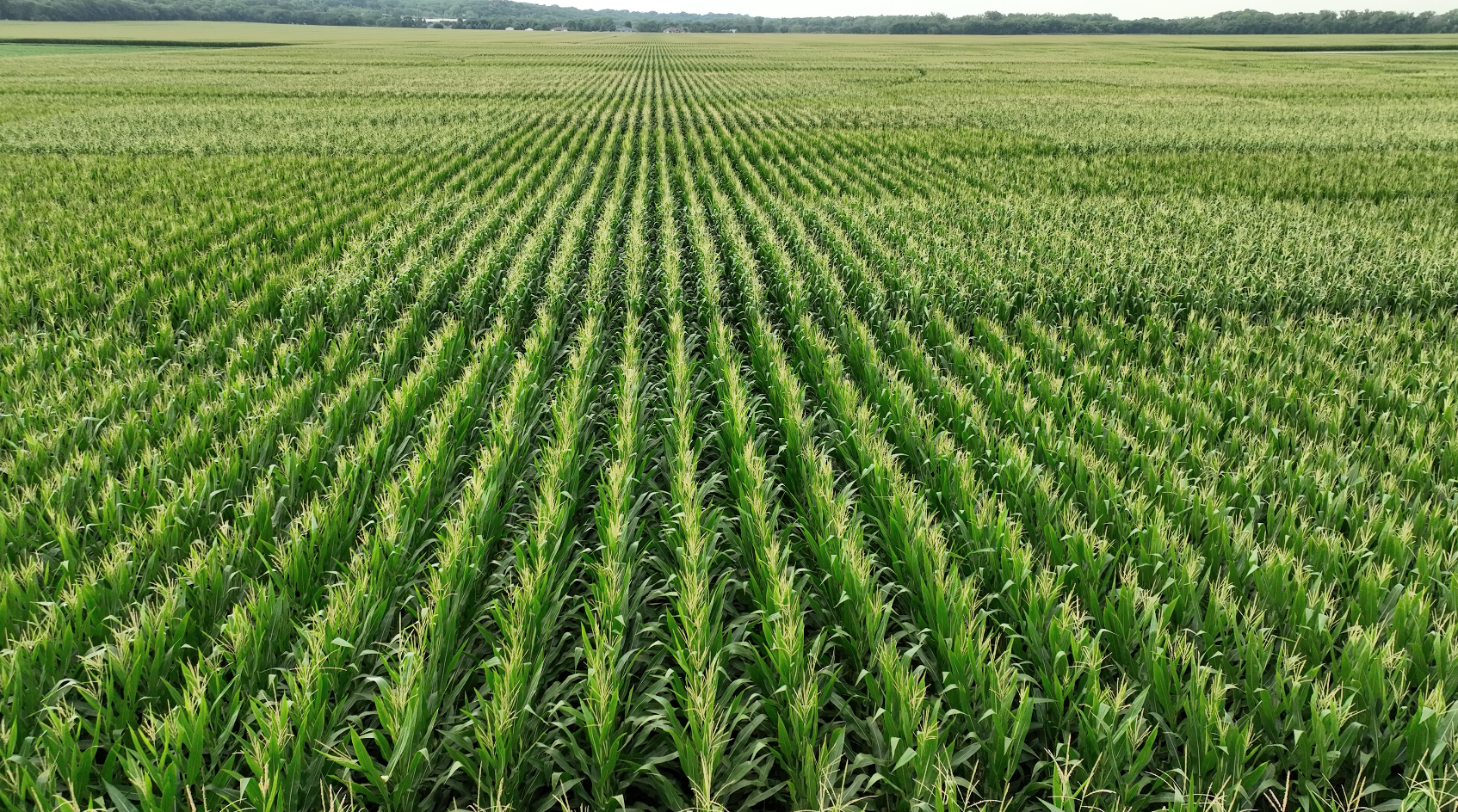
Problem: When high temperatures meet drought stress during pollination, kernel development may be seriously affected. During the critical period of pollination, silks must emerge and be fertilized by pollen to develop corn kernels. In the absence of drought stress, higher temperatures can desiccate exposed silks but do not greatly affect silk elongation rates. However, during drought, silk elongation slows and pollen shed accelerates, which is further exacerbated with the combination of drought with high temperatures. If pollen sheds before silk can fully emerge, kernel set will be more limited, leading to lower yields at harvest. Extended periods of extreme heat can also reduce pollen viability, increasing the potential for scattered seed sets.
Drought Stress Effects on Soybean Pod Development
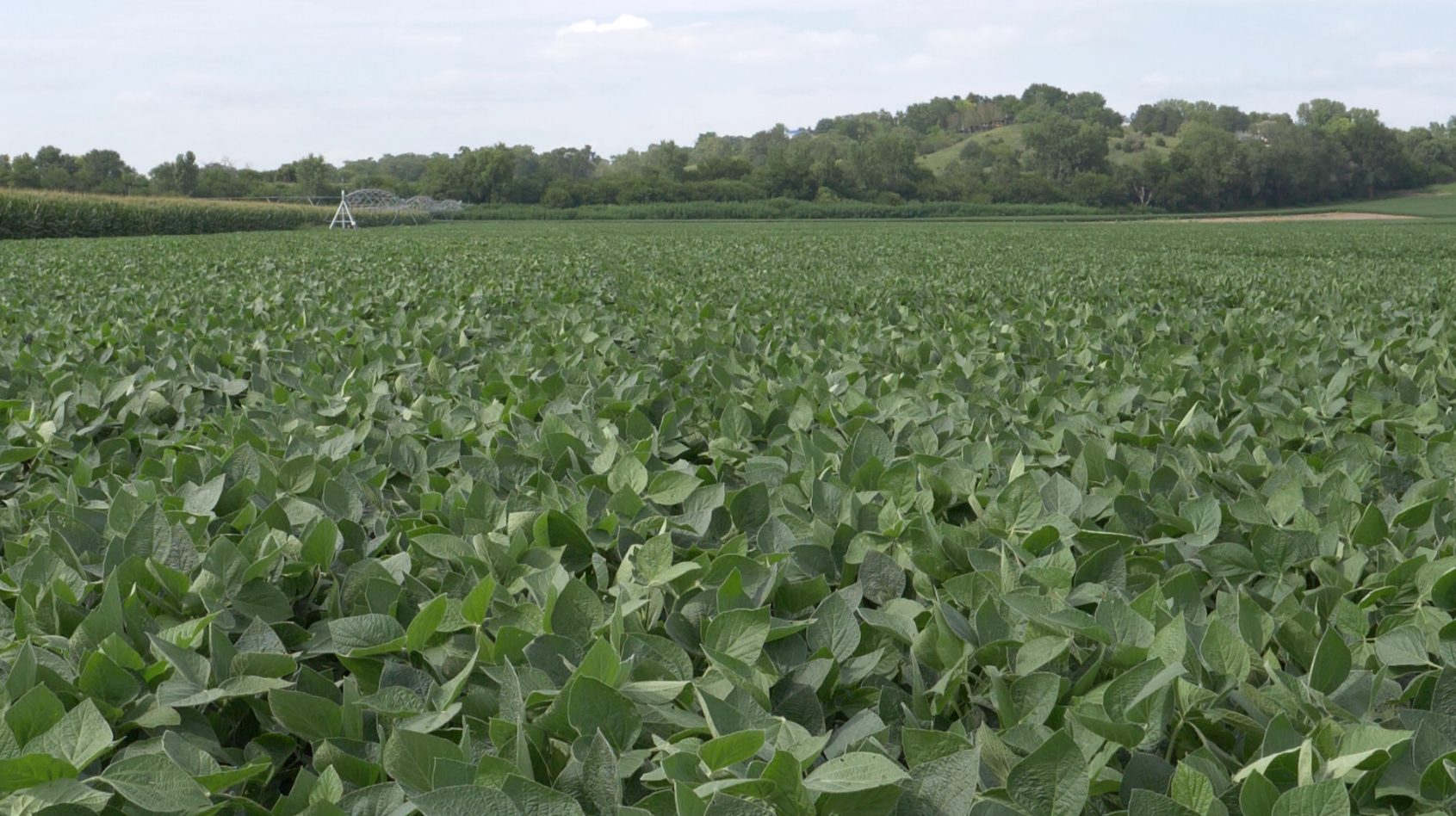
Problem: Soybeans are most sensitive to drought stress during reproductive stages, particularly from flowering through pod and seed development (R3–R6). During this period, water and heat stress can significantly reduce yield potential by increasing flower and pod abortion and limiting the plant’s ability to maintain seed set. Indeterminate soybeans may partially compensate during short stress periods by continuing to flower over an extended window, but prolonged drought reduces this ability to recover. As stress continues into pod fill, seed number and final seed size are reduced, and overall yield potential declines. Severe or extended drought during these reproductive stages can result in substantial yield loss due to reduced pod formation and incomplete seed development.
Solutions and Prevention
Managing risk starts with hybrid and variety selection for stress tolerance, helping maintain performance under variable moisture and temperature conditions. Planting timing and maturity selection can also help reduce exposure of critical reproductive stages to peak heat and drought stress.
Cultural practices that improve water use efficiency and plant health are also important. This includes maintaining proper plant populations, reducing excessive canopy stress, and using crop rotation to improve overall field resilience. In soybeans, managing compaction and drainage is especially important, as stressed root systems are less able to sustain pod development during dry periods. In both crops, balanced fertility and overall plant health help improve tolerance to short term stress events.
Inclement Weather
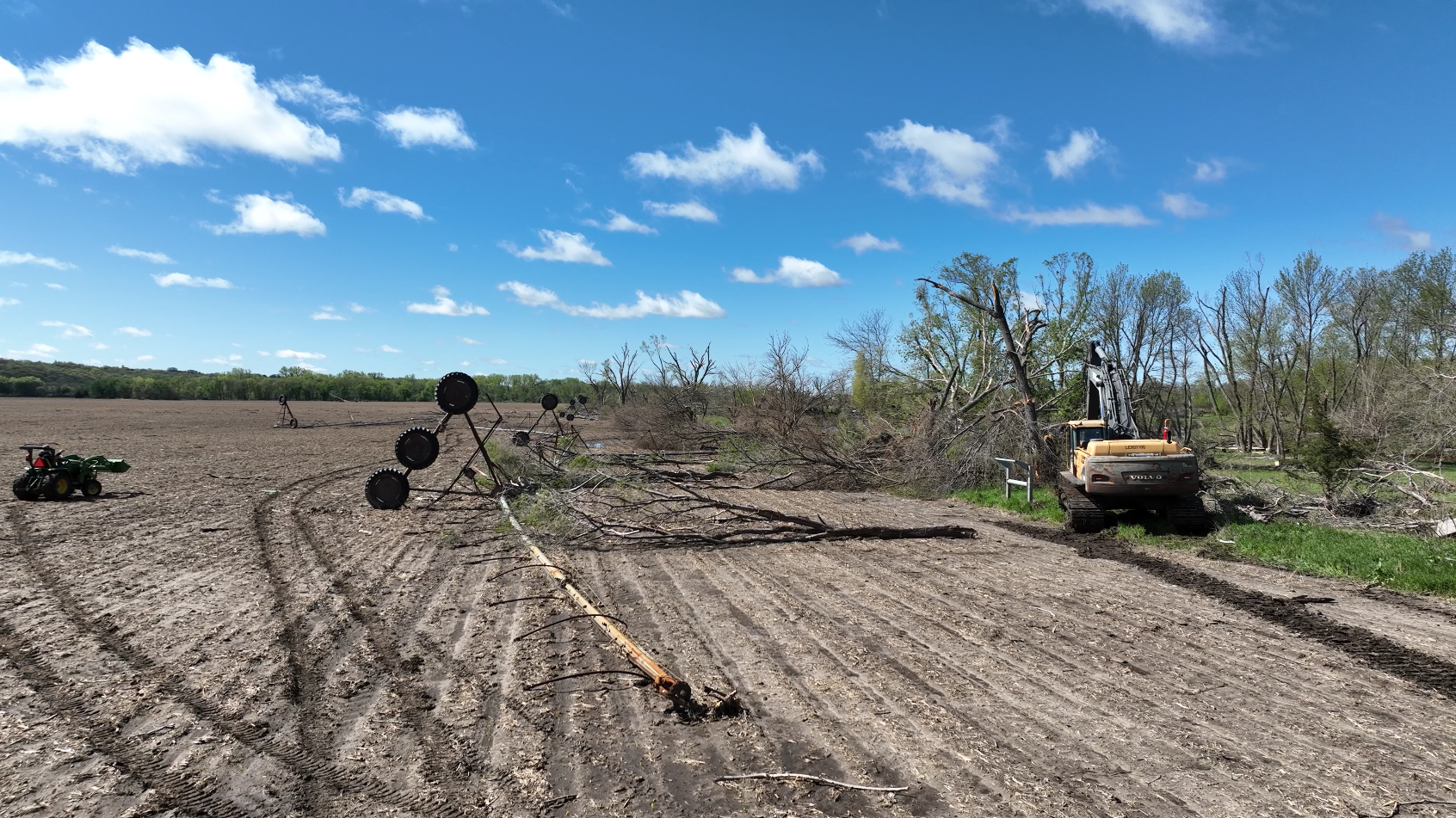
Derechos, tornados, and downdrafts associated with supercell thunderstorms are common recurring events across much of the corn and soybean belt, with highest likelihood and risk of crop damage in May, June and July. With windspeeds ranging from 58 – 100+mph, crops exposed to derecho conditions, for example, suffer significant damage and yield reduction. One nine-year study estimated that 75% of corn and soybean counties hit by derecho experiences a significant decline in crop conditions through root lodging, stalk breakage and defoliation.
Root lodging – In wet conditions, common in heavy rains from storm conditions, high winds push plants over at the soil line. Younger plants may be able to “goose neck” up and continue to grow, but may still experience yield losses.
Greensnap – Stalks during rapid growth stages under high turgor pressure are more fragile. Sudden high winds, particularly those accompanied by cooler conditions and adequate moisture, cause stalks to break, typically at the ear node or below the ear. When this happens at a node below the ear node, yield is fully lost with no chance of recovery.
Defoliation – When plants are stripped of their leaves, they lose photosynthetic capacity, robbing them of energy through grain fill. Depending on the maturity of the plant when defoliation occurs, yields may face significant reduction through reduced kernel size and kernel abortion.
Hail Damage – Yield loss in corn and soybeans from defoliation caused by severe hail is largely dependent on the growth stage of the plant when hail damage occurs. Soybeans see their highest yield losses from R4-R6, when it is too late for plants to fill in with new leaves to provide energy to developing seeds. Conversely, leaf loss is much more detrimental to corn yields in the earliest reproductive stages, as late-stage damage mostly impacts kernel size and weight rather than total number of kernels.
Hail damaged corn is also at an elevated risk a number of secondary fungal infections including ear-rot and mycotoxin when there is physical damage to the corn ear. In the case of significant widespread ear damage, growers may decide to process corn crop as silage rather than grain or manage grain harvest schedules. Use of fungicides and effective irrigation management can improve crop recovery after a hail storm and minimize secondary yield losses.
Summer Disease Risks and Management
Goss’s Wilt
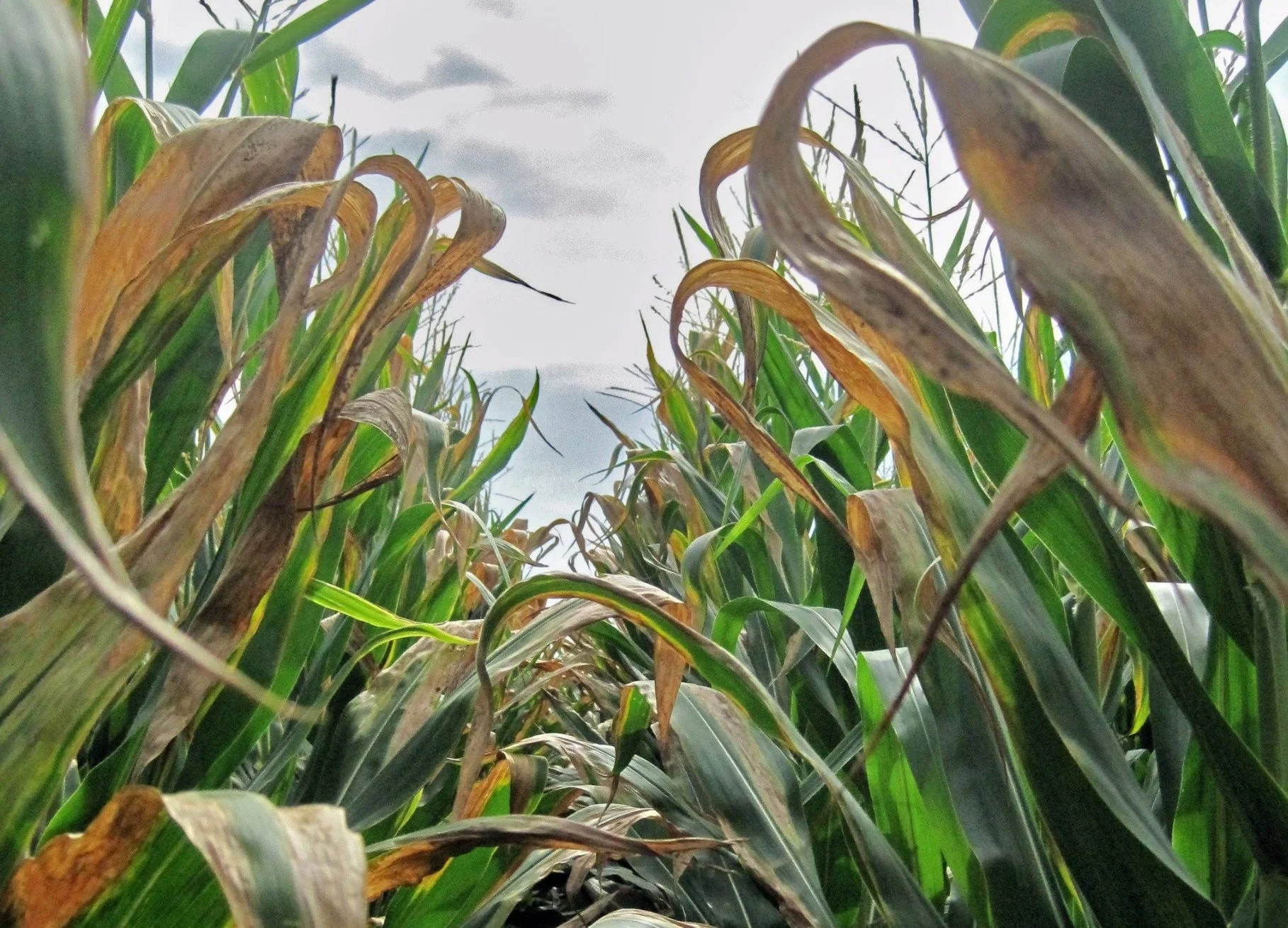
Goss’s wilt is a bacterial disease of corn caused by Clavibacter michiganensis subsp. nebraskensis that overwinters in infected crop residue. Infection most commonly occurs when bacteria are spread during thunderstorms and enter plants through wind, hail, or sandblasting wounds. Less common pathways include seedling infection in fields with prior disease history and seed borne infection that may show up in volunteer corn. Symptoms include wavy gray to light yellow lesions with dark green “freckles” along lesion margins and a water soaked appearance. Yield loss is most severe with early infection on susceptible hybrids. Management relies on crop rotation, selection of tolerant hybrids, and residue management where appropriate.
Gray Leaf Spot
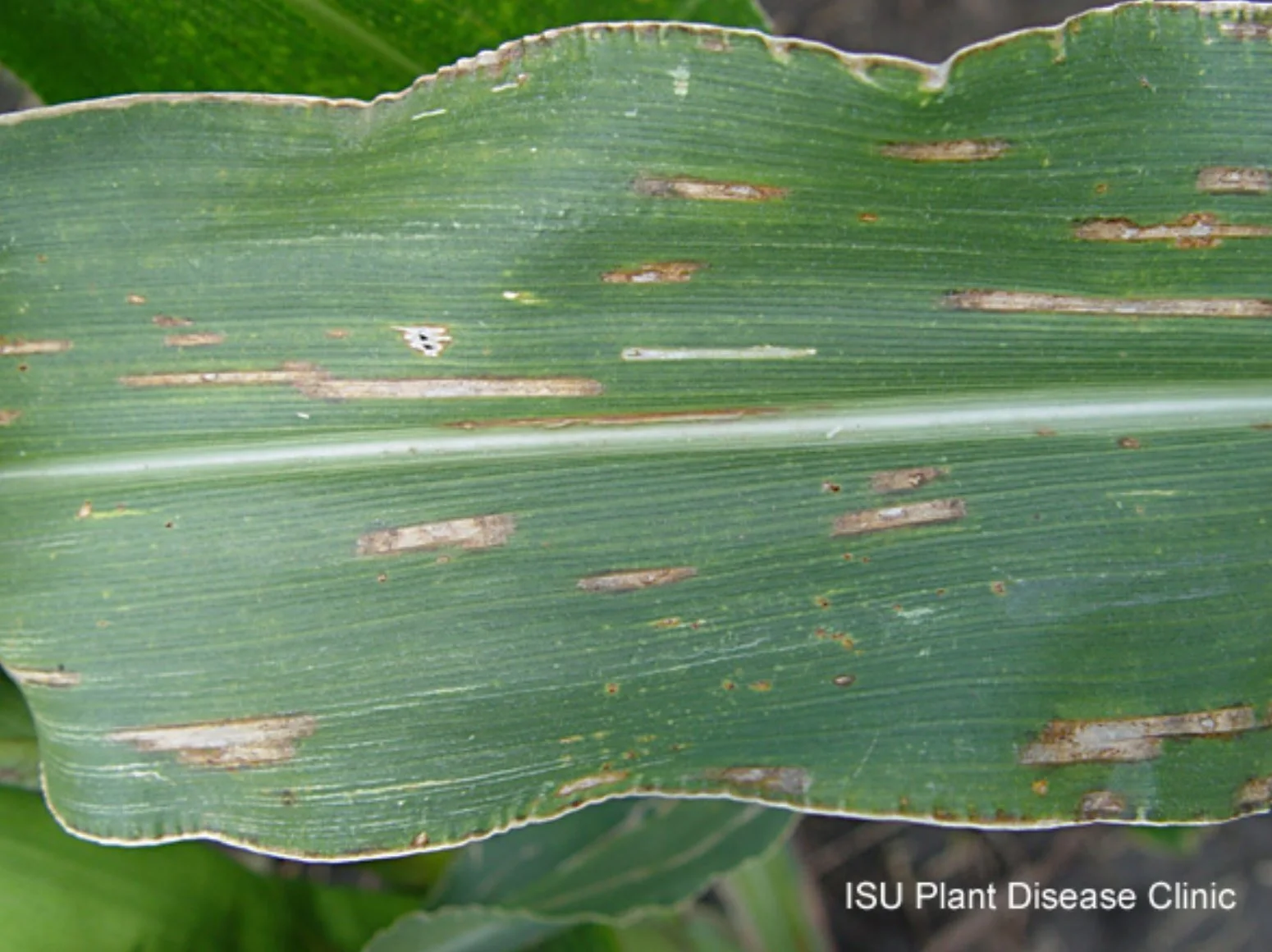
Gray leaf spot (GLS) is a fungal disease of corn caused by Cercospora zeae-maydis that survives in corn residue on the soil surface. Disease development is favored by warm temperatures, high humidity, prolonged leaf wetness, and continuous corn production under reduced tillage. Symptoms appear as rectangular gray to tan lesions restricted by leaf veins, often becoming most visible after silking in July. Infection reduces functional leaf area, limiting grain fill and increasing risk of yield loss and stalk lodging. Management includes hybrid selection for tolerance, crop rotation, residue reduction where feasible, and timely fungicide applications when conditions and scouting indicate risk. Accurate diagnosis is important, as Bacterial Leaf Streak lesions can be confused for GLS lesions, on which fungicide treatment would not be effective.
Sudden Death Syndrome
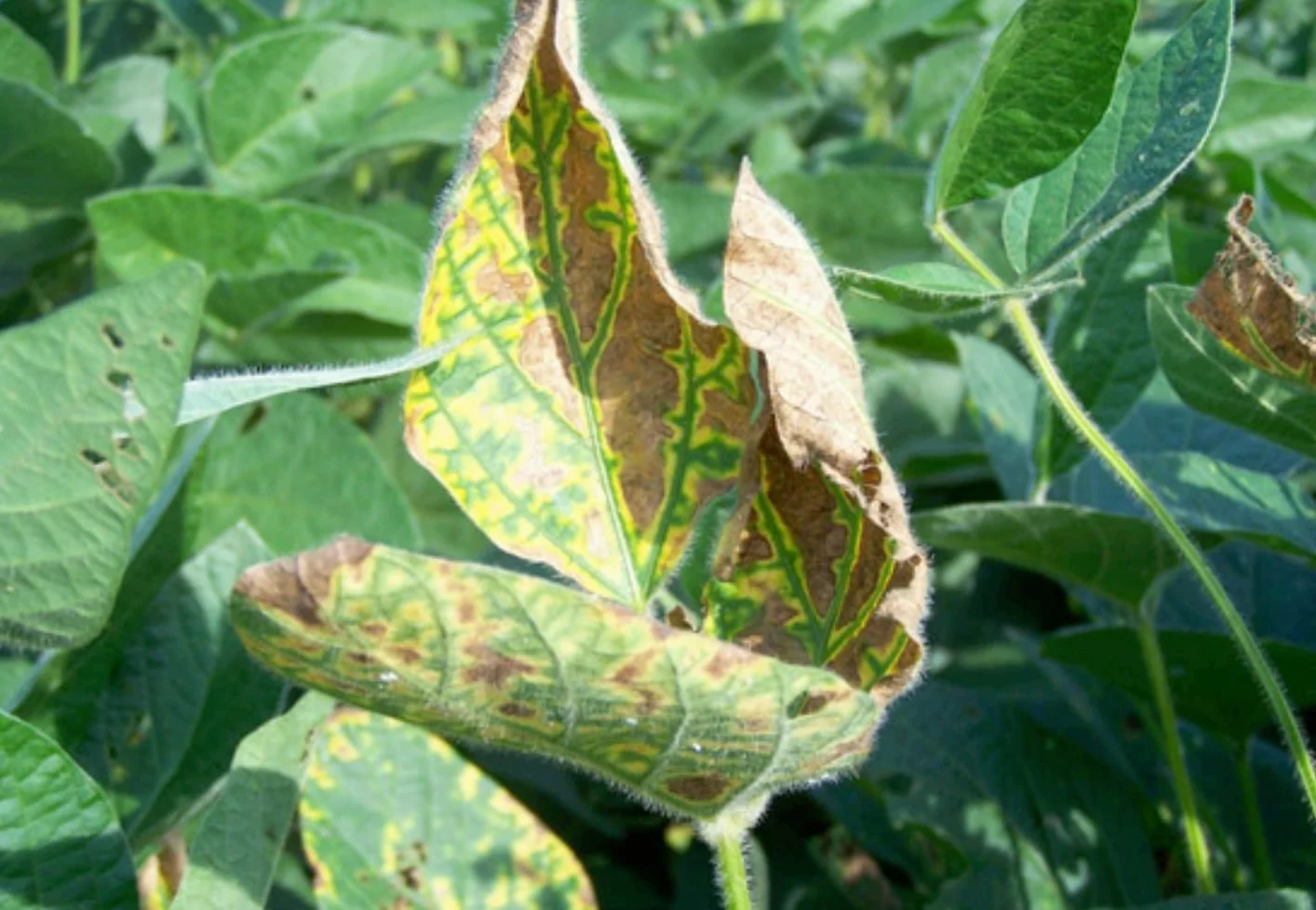
Sudden death syndrome (SDS) of soybean is caused by Fusarium virguliforme, a soilborne fungus that infects roots early in the season, especially in cool, wet, or compacted soils and fields with soybean cyst nematode pressure. The pathogen overwinters in soil and crop residue and produces toxins that move to the foliage mid-season, causing interveinal chlorosis and necrosis while stems often show a white pith with gray brown tissue. Yield loss results from reduced water and nutrient uptake, reduced photosynthesis, and pod and flower abortion, with severity tied to timing of symptom development. Management includes later planting in high-risk fields, selection of varieties with SDS tolerance, improved drainage and reduced compaction, and use of seed treatments.
White Mold
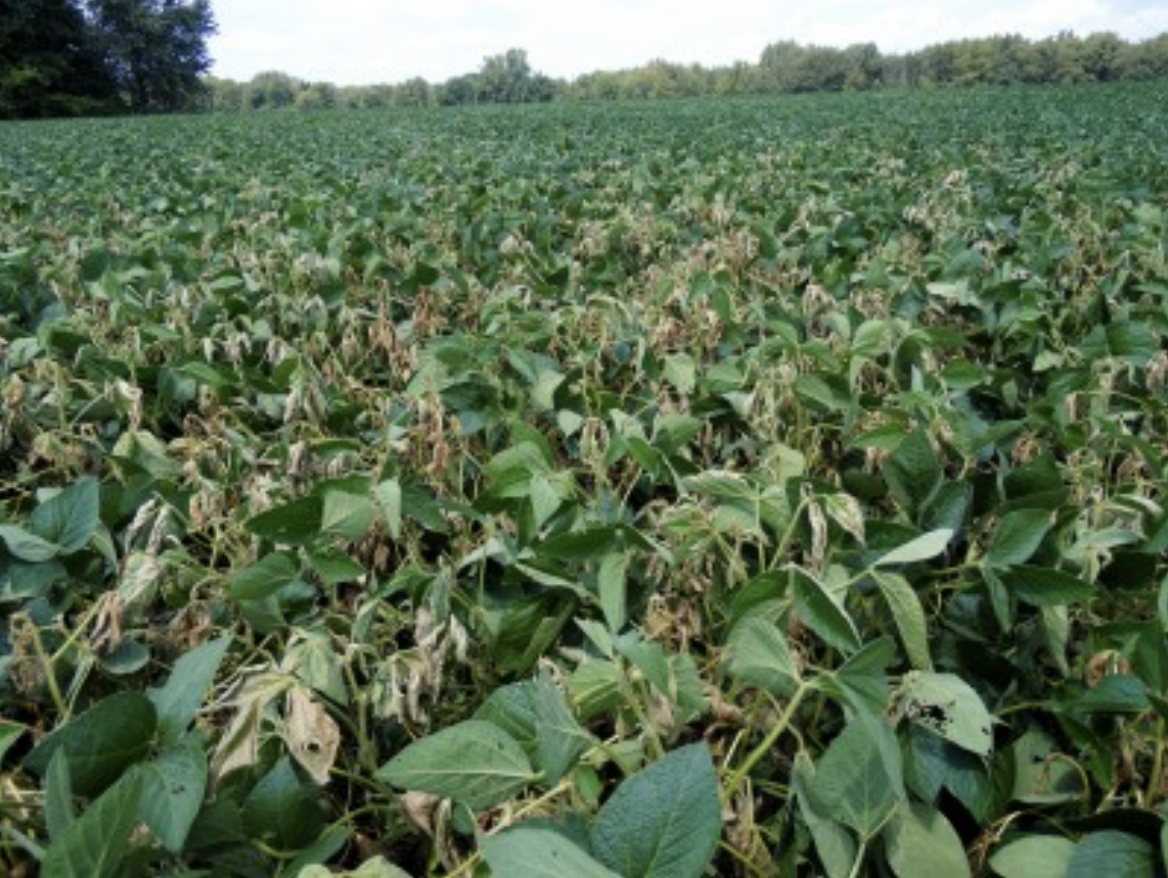
White mold of soybean is caused by Sclerotinia sclerotiorum and infects plants primarily through flowering tissues before moving into stems where it restricts nutrient and water flow. Infection produces water soaked lesions that progress to white cottony growth and hard black sclerotia that allow the fungus to survive in soil. Disease is favored by cool temperatures, frequent rainfall, high humidity, and dense canopies that remain wet for extended periods during flowering. Yield loss increases with infection levels and is driven by reduced pod number and seed size. Management includes wider rows, moderate plant populations, later planting to reduce canopy density, crop rotation away from susceptible hosts for multiple years, strong weed control, hybrid selection for tolerance, and preventative fungicide use when conditions favor disease development.
Reducing risk through timely decisions and field awareness
While summer risks cannot be eliminated, understanding when crops are most vulnerable and using integrated management practices can help reduce impact and protect yield potential. Hybrid and variety selection, planting decisions, and proactive field management all play a key role in building resilience through unpredictable growing conditions.