
Nitrogen Uptake During Rapid Growth
The portion of a corn plant’s life between V6 (six fully expanded leaves) and VT (tassel) is often referred to as the period of rapid growth. During this time frame the plant quickly transforms itself from a relatively small seedling to a tall-statured, leafy giant. The corn plant has been working very hard during the first month of its life initiating leaves and preparing for this burst of growth. All the pieces have been put in place, the plant is simply expanding these parts to their intended size. We see the transition occurring above ground, but the root system is also experiencing this same expansion. So, we can think of the period of rapid growth as a time when the corn plant completes building the vegetative plant body from the blueprint it established as a seedling.
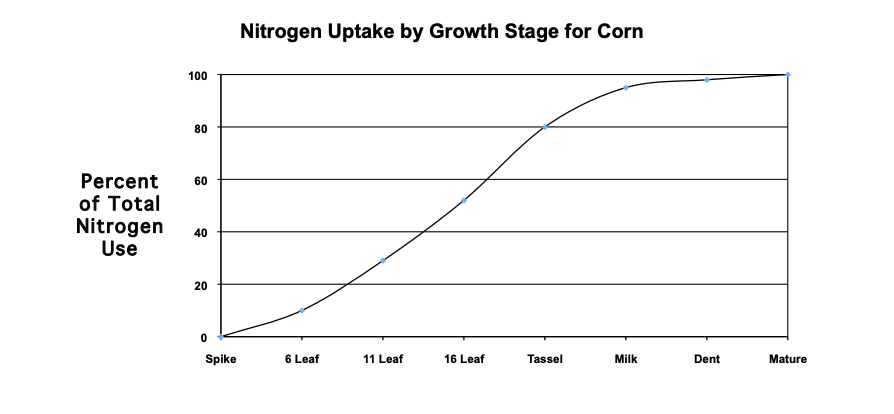
Nitrogen uptake can be considered in a similar way. From emergence to the V6 stage, the plant has taken up only ten percent of the total amount of nitrogen it will need. While that isn’t very much nitrogen, it is a very important part of the total nitrogen program. Early nitrogen plays an essential role in getting the crop off to a good start, and, in terms of impact on yield, is perhaps the most important portion of all the nitrogen used by the crop. Corn determines ear size between the six and ten leaf stages (V6 and V10). If the crop is short on nitrogen during this time, yield will be limited regardless of the quality of nitrogen available during the remaining growing season. Early nitrogen has a direct impact on setting the stage for high yield; nitrogen taken up during rapid growth allows the plant to realize that yield goal.
Between six leaf and tassel, the corn crop will take up approximately 70 percent of the nitrogen that enters the plant during the entire growing season, bringing accumulated nitrogen uptake to 80 percent of the total by the end of the tassel stage, or VT. The following graph, based on a compilation of nitrogen uptake data from many different sources, illustrates nitrogen uptake by growth stage for corn.
The huge nitrogen demand during rapid growth is generally met by a combination of nitrogen sources. These include residual nitrogen (nitrogen remaining in the soil after the previous crop was harvested), nitrogen fertilizers applied during the year, and the release of nitrogen from soil organic matter (source for the previous legume crop credit). Organic matter is releasing nitrogen during approximately the same time frame this rapid growth spurt is occurring, making it a very well timed nitrogen source. Residual and fertilizer nitrogen aren’t always as well timed. Residual nitrogen has been in the soil for several months prior to this period of maximum uptake, making it susceptible to losses from leaching or denitrification. The same can be said of pre-plant nitrogen applications. The time lag between application and nitrogen uptake is the primary reason side-dress applications or use of nitrogen stabilizers are a general recommendation for soils that are prone to nitrogen losses. These include sandy soils, where leaching can be a problem, and soils where water tends to pond, because saturated conditions lead to denitrification.
Nitrogen entering the plant is initially used to help build more plant, but most of the nitrogen in a corn plant is eventually transported to the developing ear. Approximately 65 to 75 percent of the nitrogen in the plant is removed from the field at harvest in the form of protein in the grain. The remaining nitrogen is left in the leaves, stalk, roots and cob, where it will be released back to the soil over the next several years as these tissues are decomposed by soil microorganisms.