
Gray Leaf Spot – Corn
Gray leaf spot (GLS) is a foliar disease of corn caused by the fungus Cercospora zeae-maydis. Infection by the GLS fungus damages the plant by reducing the amount of healthy leaf area capable of producing the energy needed to grow/maintain the plant and make grain. Leaf damage by GLS results in both yield loss and increased stalk lodging at harvest. Corn hybrids differ in their susceptibility to GLS, making hybrid selection an important consideration in GLS-prone areas.
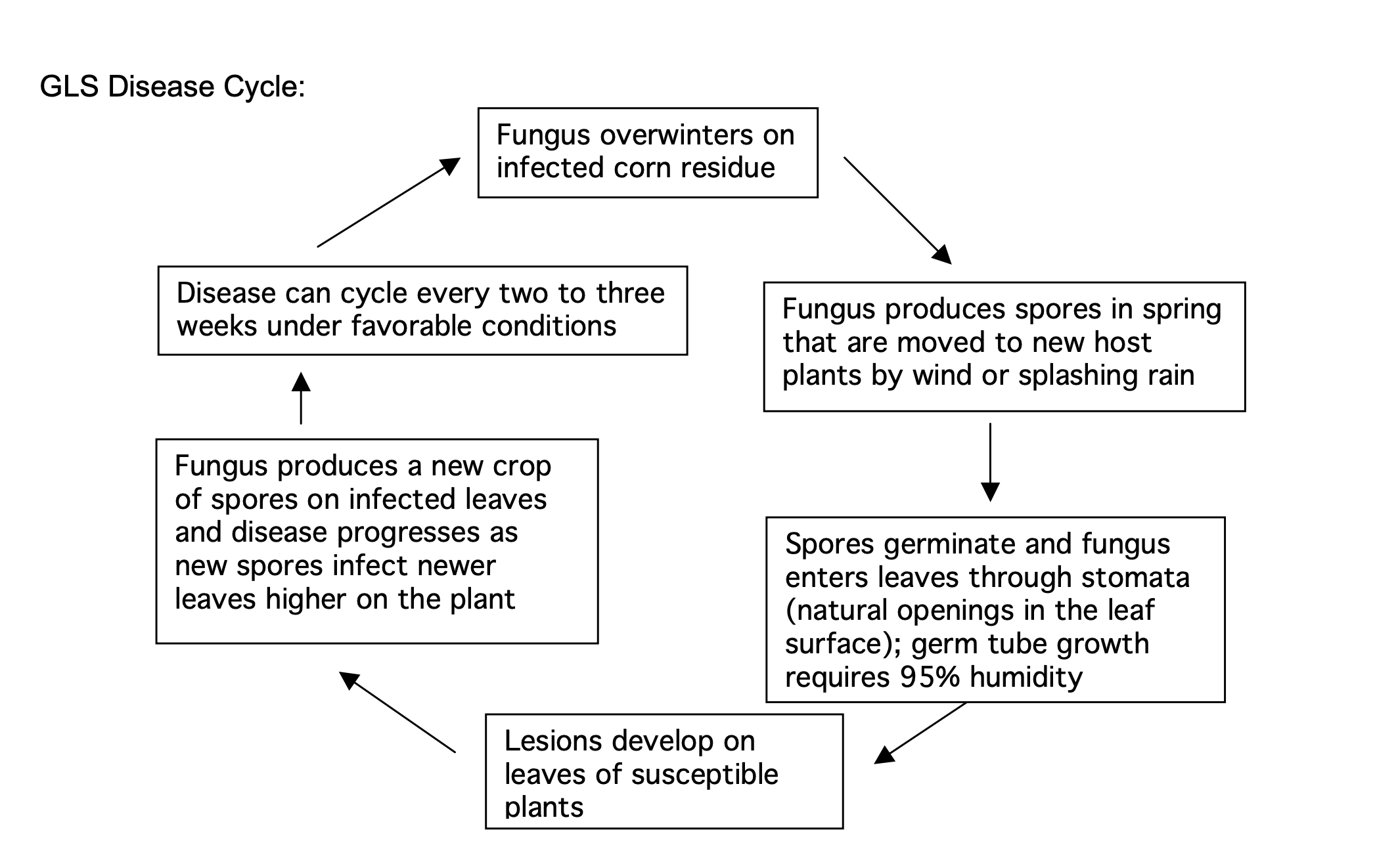
Initial GLS infections often occur in June, but it is during July, especially after silking, that symptoms from an infection become most evident. Because the GLS fungus overwinters on infected corn residue left above the soil surface, disease incidence and severity over time has paralleled the increase in conservation tillage practices, both within an area and over a wider geography.
Disease is favored by:
Prolonged periods of dew, fog, and cloudy weather
Free moisture on the leaves for 12 hours (95% humidity or higher)
Warm temperatures – 70 to 85° F
Continuous corn (source of fungus to start infection)
Minimum or no tillage – residue left above soil surface throughout entire year
Economic threshold:
Up to mid-silk: 50% or more of plants show one or more lesions on the third leaf below the ear leaf or higher and the hybrid is susceptible or moderately susceptible to GLS
Brown silk: 5 to 6 lesions on the ear leaf with a forecast for 2 to 3 weeks of weather conditions that are favorable for disease development and the hybrid is susceptible or moderately susceptible to GLS
Control:
Crop rotation (most effective when combined with some level of tillage to help speed decomposition of infected residue)
Tillage (must be complete, so probably not feasible).
Plant an earlier maturity hybrid (reduce loss potential by completing grain production before disease becomes severe)
Plant Tolerant hybrids
Fungicide treatments
Crop rotation and tillage reduce GLS losses by delaying initial disease infection. GLS spores from nearby farms can still infect a field, so these practices do not eliminate risk of disease. Planting an earlier hybrid may reduce overall yield potential. Use of a tolerant hybrid is the preferred method for GLS management because it is compatible with all tillage and cropping sequence options and maintains optimum yield potential by not limiting maturity relative to length of the growing season. Fungicide treatments are also an effective means of controlling the disease provided the crop is scouted regularly and the treatment is applied timely.
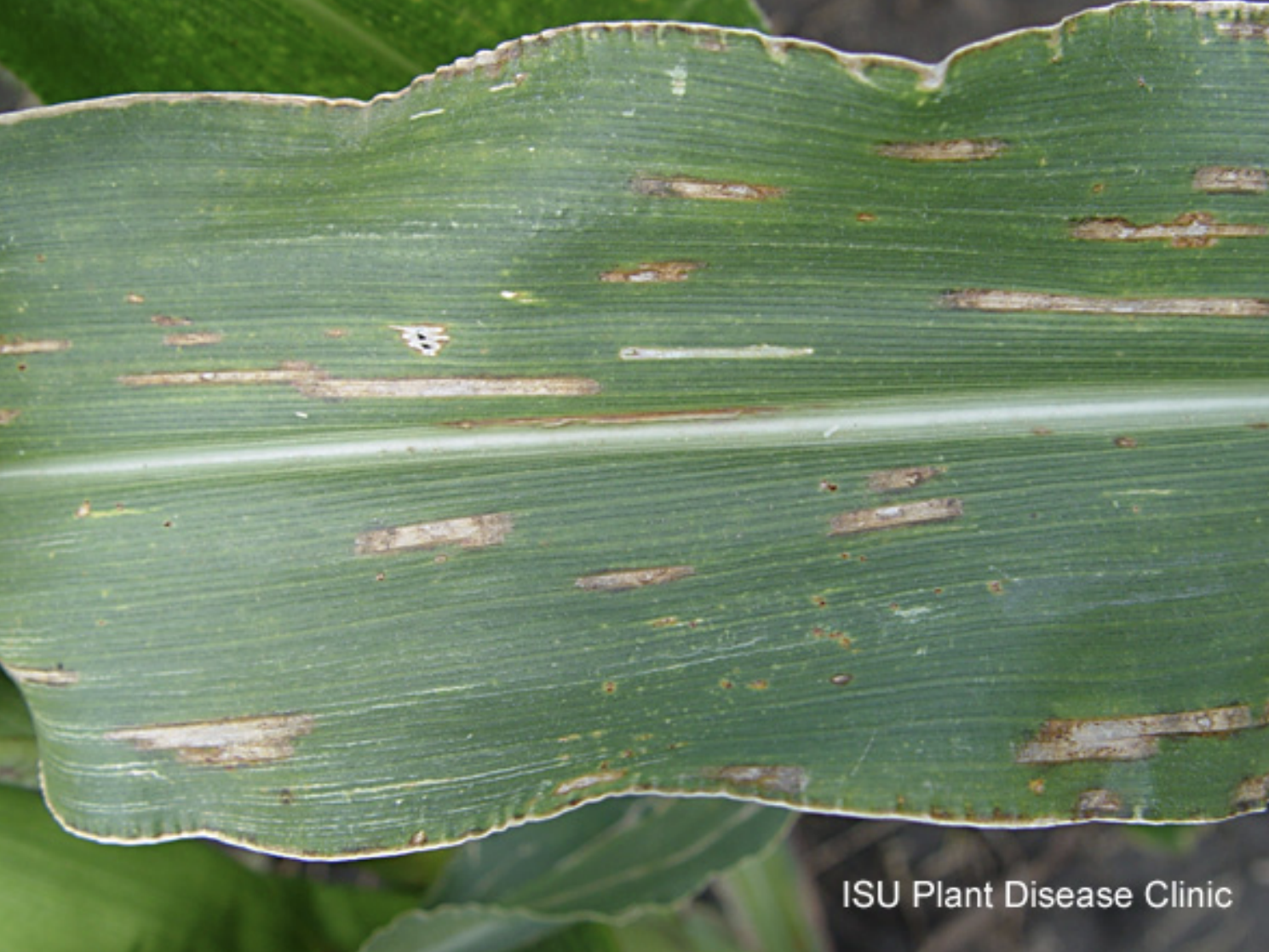
Gray leaf spot of corn. Photo courtesy of Iowa State University